Silent, so silent now,
Now the guns have stopped.
I have survived all,
I who knew I would not.
But now you are not here.
I shall go home alone;
And must try to live life as before
And hide my grief.
For you, my dearest friend,
who should be with me now,
Not cold too soon,
And in your grave,
Alone
This relates to my radio play because it reflects the life after the war. It is similar through this poem tells the story of loosing someone - a loved one- which is very similar to the ending of my Radio play.
Sunday, 23 January 2011

Saturday, 22 January 2011
The Constant Gardener
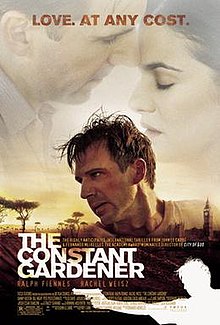
Plot: After his wife is murdered in Kenya, Justin Quayle, a mild, low-level diplomat and a constant gardener, must investigate his wife's death, their relationship, and his own heart. In flashbacks, we see them meet, marry, and fall in love; we follow her in the teeming streets and clinics of Nairobi, usually accompanying Arnold Bluhm, a Black doctor with whom she spent the night before her murder, and who, after robbers, is the prime suspect. In his own investigation, Justin must not quail as he faces his memories, his colleagues, local police, hired thugs, and a nasty corporate CEO. Help and connections, as well as conspiracies, come from unexpected places.
This is similar to my play because there is a theme of relationships and how far people would go for the people they love and care about. There is also a sense of journey as the couple in this travel to try and achieve what they want to find out which is similar to the questioning of the journey of the Jews in the Germans hands and getting the know the truth about the camps.
The Pianist
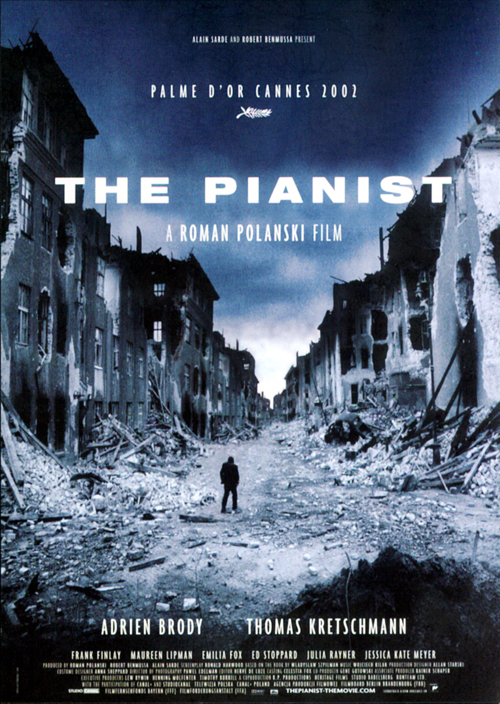
Plot: A brilliant pianist, a Polish Jew, witnesses the restrictions Nazis place on Jews in the Polish capital, from restricted access to the building of the Warsaw ghetto. As his family is rounded up to be shipped off to the Nazi labor camps, he escapes deportation and eludes capture by living in the ruins of Warsaw.
This is similar to my radio play because it shows the fall of the Jews and how the Germans took over their lives. It also shows the separation of families in the camps, the atmosphere of the concentration camps before and after the Jews are sent there, the desolate settings during the war, a kindness of a Nazi soldier, escapism out of the camps, a dream and a passion which will never die.
Miss Saigon

Plot : Set in 1975 during the final days of the American occupation of Saigon, Miss Saigon is an epic love story about the relationship between an American GI and a young Vietnamese woman.
Kim is working in a sleazy Saigon night club owned by a notorious wheeler-dealer known as 'The Engineer'. John, an American GI, buys his friend Chris the services of Kim for the night. That night will change their lives forever.
Three years later, the US Army has fled Saigon. Chris has returned to America and is now married to Ellen, an American women. He believes that Kim is dead. However Kim has left Saigon and is living in poverty with her three year old son, Tam in Bangkok. Chris finds out that Kim is alive and has bore him a son and so returns to Asia in search of Kim and Tam.
When Kim learns that Chris is in Bangkok with his new wife all her hopes to be reunited with him disappear. She is desperate for her son to have a future in America with his father and will make the ultimate sacrifice to achieve this.
This musical is similar to my play through the way it is a forbidden love story which ends in tragedy. There is also a war story which takes place as the lovers meet and a plan to run away with the hope to be free and live together forever even though the audience know that it will never happen because of who they are.
Life Is Beautiful

This film is similar to my radio play in the way the males create illusions to protect the ones they love and care for from the horrors of the camps. It also tells the story of the Jews before, during and after the war and what the jewish families went through- even the children.
Research: P.S I love you

Plot: Holly Kennedy is beautiful, smart and married to the love of her life - a passionate, funny, and impetuous Irishman named Gerry. So when Gerry's life is taken by an illness, it takes the life out of Holly. The only one who can help her is the person who is no longer there. Nobody knows Holly better than Gerry. So it's a good thing he planned ahead. Before he died, Gerry wrote Holly a series of letters that will guide her, not only through her grief, but in rediscovering herself. In the weeks and months that follow, more letters from Gerry are delivered in surprising ways, each sending her on a new adventure and each signing off in the same way; P.S. I Love You. Holly's mother and best friends begin to worry that Gerry's letters are keeping Holly tied to the past.
This movie links to my play through the way it is a story of two lovers who have a devastating end to their relationship. It is also similar through the way the males make plans to making life easier to their partners by writing letters and giving them a sense of hope and adventure with every one that is sent even though the people around them believe that it is keeping them tied to the past and things that can't happen.
Thursday, 20 January 2011
The Ninth Day

The ninth day can help me further for my radio play through the way it was based around a diary which was written during the War. It expresses the feeling and theme of danger, survival and trust throughout with the characters riddles being told in this film. Letters and Diaries are also used which is a key device in my plot of my radio play and it shows the key communication at this time.
Subscribe to:
Posts (Atom)