Monday, 31 January 2011

Research: Theme: Father and Sons:

The Following films that are shown below are all films that feature a father and son relationship whereby either the Father prefers someone else close to the family to be their son or other members of their family are preferred compared to their first born son.

                                                                 Road To Perdition


The film explores father-son relationships, not only between Michael Sullivan and his son, but between Sullivan and his boss, John Rooney. Sullivan simultaneously idolizes and fears Rooney, and Sullivan's son feels the same for his own father. Rooney's son, Connor, has none of Sullivan's redeeming qualities, and Rooney is conflicted on whom to protect: his real son or his surrogate son. Connor is jealous of his father's relationship with Sullivan, which fuels his actions, ultimately causing a domino effect that drives the film.
Because Sullivan shields his background from his son, his attempt to preserve the father-son relationship is actually harmful. Tragedy brings Sullivan and his son together. Sullivan escapes from the old world with his son, and the boy finds opportunity to establish a stronger relationship with his father than before. Tyler Hoechlin, who portrayed Michael Jr., explained, "His dad starts to realize that Michael is all he has now and how much he's been missing. I think the journey is of a father and son getting to know each other, and also finding out who they themselves are. "
This is similar to my character because there is a sense of disappointment between Billy's relationship with his Father and the dream that Emmett has about his son becoming more like his best friend Rory.

                                                                     Spiderman


Norman Osborn was the co-owner of a leading New York firm, Osborn Industries, which specialized in research and development, including robotics. His wife Emily died within a year after the birth of their son Harry leaving Norman embittered. The product of an oppressively stern upbringing by an alcoholic father who lost the family fortune, Norman raised Harry dispassionately, often devoid of fatherly warmth, being chafed by Harry's failure to demonstrate academic excellence or a competitive drive. Norman however had a more father- son - love with Peter- Harry's best friend who is intelligent and is everything Harry wants in a son.  This is similar to my radio play because it sticks with the whole theme of a father and son realtionship. There is also the fact that Norman and Harry's relationship consists of embarrassment and disappointment and Norman and Peter's relationship consists and proudness and compassion which is similar to Billy,Rory and Emmett's relationship in my play.

Sunday, 30 January 2011

Moulin Rouge

Plot : A young idealist named Christian moves to Paris in the summer of 1899. There he meets a host of characters including Toulouse Lautrec and Harold Zidler, who owns a lavish nightclub called the 'Moulin Rouge'. Lautrec uses Christian to plug his new play and so dresses him up to convince one of Zidler's best employee's, the courtesan Satine (who also suffers from tuberculosis a.k.a. consumption), to get the play on Zidler's priorities. Zidler also fixes an "appointment" between an evil Duke and Satine on the very same night so that the rich Duke will invest in his nightclub. Satine mistakes Christian for the Duke and inadvertentely falls in love with him and vice versa. Zidler convinces the Duke to invest, but Satine and Christian must keep their love a secret as the Dukebelieves that Satine loves him and also he is by nature a very jealous man. When the Duke finds out about their secret affair, he gives Satine an ultimatum: she must either do the play his way and go with him at the end of the play, or he will have Christian killed. Satine decides to save Christian and goes on with the show whereas Christian decides to confront Satine about it. When he does, Satine decides to blow off the Duke and go with Christian. She then suffers an undefined but probable respiratory attack and dies of her condition behind the curtains. Christian grieves but a year later, writes their story.


This film can help me with my Radio Play because it is a doomed love story. It is told both in 1st and 3rd person through the narration of Christian in certain scenes and 3rd person with conversations with other characters in the film. This is the same narrative techniques i have done with my Radio Play. Other similarities include re telling the story and the risks of a realtionship

Thursday, 27 January 2011

Character research: Billy Hoffmann- German Boy

                                                           Character research: Billy Hoffmann

Romeo: Romeo + Juilet. The son of Montague, Romeo is first introduced to us as a sad, melancholic, apathetic youth. His reason for sadness is universal; Rosaline his love will not return his affections. Not initially daring, it is his friends Mercutio and Benvolio who suggest he gatecrash or arrive uninvited at the Capulet party to see Rosaline. There he meets Juliet falling instantly in love. From this point on, Romeo no longer is melancholic, but dynamic and courageous, risking his life at the Capulet's house to be near Juliet and later breaking a banishment order which threatens death for him, to see his Juliet again. Well regarded even by Capulet, his enemy, Romeo is a thoughtful man, unwilling to provoke fighting unlike the hot-blooded, adversarial Tybalt, whom he kills. Romeo also kills Paris but in both encounters sought to avoid fighting, winning only to defend his life. At the end of the play, he commits suicide, rather than live without Juliet, the ultimate display of loyalty for his love Juliet since his life obviously no longer had meaning without her.
This is all very similar to one of the main characters in my radio play for example at the start of the radio play Billy is confused and sad of what job has to do because of his father. However even though Romeos sadness is about love and Billy's is about not being to be a writer both characters are toubles until they meet their lover. Romeo has a best friend and a cousin who in my radio play is Rory- the ideal German soldier- they both influence Romeo and tell him to keep his heads out of the clouds which is similar to the friendship in the play. Romeo also gets banished once he kills Tybalt which could be the same as Billy being disowned because of his ambitions of being a writer and not a soldier. They both also risk their lives for the one they love.

                                                      Character research: Billy Hoffmann


Michael Berg: The reader: he is 15 years old when he develops Scarlet Fever and must stay in bed for months. As he recovers, he searches for the 30-something woman who helped him when he first became sick. He finds her, and they become lovers. She insists that he read to her each time before they make love. When he turns 16, she leaves. Years later, in law school, he finds her again. This time, she is being tried by a German court: she was a guard over women at Auschwitz and sent them to their death. He struggles because he knows a secret about her that could result in her receiving a lesser prison sentence, but it is something she does not want to admit.
This relates to the character of Billy because Michael is a dreamer- he wants something that he can never have which is Hanna- this is the same with Billy- he knows he can never love a Jew because of his position in the army and because of the relationship with his father however he does it anyway.  Michael also feels loss and betrayal which also appears within my character. In the film the reader once Michael and Hanna become lovers his attitude and mood changes towards his family- he is quieter and more awkward with his behaviour which is the same as Billy when he spends the day with Helena. They both also take a risk which si going back to what they have hope and faith in- their lovers.


                                                        Character research: Billy Hoffmann

Charlie Babbitt: Tom Cruise: Rain Man:
the ruthless car-salesman, Charlie Babbitt, discovers that his father had a three-million-dollar fortune that was left behind after the man’s death. However, to his disbelief and infuriation, all he inherited were the 1949 Buick Roadmaster Convertible and his father’s prized rose bushes. The remainder of the fortune was to be spent by a trustee to carry out the man’s requests. Through his charm and his manipulative talks, he was able to find out that the person in charge of the trust fund. This character that Tom Cruise portrays has similiarities to my character. 
First of all in the film of Rain Man Charlie wants to win his fathers effection which is very similar to Billy who wants his fathers approval for him being a Nazi soldier. Charlie is also selfish and arrogant which is similar to the behaviour of most sterotypical young Nazi German soliders and can be used when Billy looses his anger and the soldier side of him comes out to the listener. Charlie also has the ambition to look after his brother and to prove to his father that he can do it alone which is similar to Billy's job at the camp and his effort to have Emmetts approval. Charlie is also quite sympathetic. When he hears about his brother Raymonds story about how he was taken away Charlie soon sympathises with his brother and realizes that it was his fault why his brother was taken. He blames himself when he finds out the truth and he makes the effort of being nice to Raymond instead of getting annoyed with him all the time- he even shows love towards him near the end of the film. This is similar to Billy- he realizes it is his fault why Helena is in the camp, he also realizes what he has done to many Jews and the pain that he has caused to both them and Helenas family.  


                                                  Character research: Billy Hoffmann


Christian: Moulin Rouge: Ewan Mcgregor:

Christian, a young writer with a gift for poetry moves into the bohemian underworld of Paris. He is taken in by the absinthe-soaked artist Toulouse-Lautrec, whose life centres around the Moulin Rouge. Christian falls into a passionate but doomed love affair with Satine, the Sparkling Diamond, the most beautiful courtesan in Paris & star of the Moulin Rouge.

This character has similarities to Billy because he is a writer and is taken in by love. They also are in a difficult love situations whereby they aren't meant to fall in love with the person they are with. Christian and Billy also risk their lives for their love for example Christian takes beating's from the Duke's henchmen and threats for him to be shot which is similar to Billy's Father who realizes what his son has become because of love. 

                                                         Character research: Billy Hoffmann


Bruno:Boy In The Striped Pajamas: Asa Butterfield: Bruno is an eight-year-old child living in Germany during WWII. He loves exploring and adventures. He also loves to read adventure stories. He is a very active little boy who loves to play and hates boredom. He has many friends until his Nazi father makes his family move to Auschwitz, Poland where he befriends Shumuel, who is also eight, but Shumuel is a Jew living on the other side of a barbed wire fence. When he brings food to his starving friend, he learns more about why the fence is there and why his friend is on the other side. He begins to question whether his father is a good man or not. What Bruno doesn't know is that his dad is a commandant at Auschwitz, and he kills, beats, and puts thousands of Jews like Shumuel to work every day. When his mom announces that she, Bruno's sister, and Bruno are returning to Germany, Bruno, being the caring lad he is, tried to help Shumuel find his missing father. But, when he goes to the other side of the fence with Shumuel, the Nazis make the Auschwitz inmates march to the gas chambers, marking a tragic end to Bruno's short, adventurous, and sad life.

Bruno shows similarities to Billy because Billy (even though he isn't as young as Bruno) is a young German boy who was hypnotized by the education of Germany around the time of the second World War. He is confused as to what is going on and he loves adventure and books which is similar to Billy who questions his father's job as a commandant and who has an ambition to be a writer. 
The Boy In The Striped Pajamas is also told through the eyes of Bruno which is similar to my radio play which is told through the eyes of Billy. Even though Bruno's friendship with Shumel appears strong he betrays him when one of his fathers men questions him when Shumuel is eating inside the house. Bruno lies and avoids punishment whilst Shumel takes the blame and gets punished , this same theme of betrayal happens to appear in my radio play.  


Character research: Billy


Count Laszlo de Almásy: Ralph Fiennes: The English Patient:
Beginning in the 1930's, "The English Patient" tells the story of Count Almásy who is a Hungarian map maker employed by the Royal Geographical Society to chart the vast expanses of the Sahara Desert along with several other prominent explorers. As World War II unfolds, Almásy enters into a world of love, betrayal, and politics that is later revealed in a series of flashbacks while Almásy is on his death bed after being horribly burned in a plane crash.

This character relates to Billy because both want to risk everything for love even though it is forbidden . Both also have a relation with books and being read to as their story continues. Almasy is also wound up on love and is very impatient when wanting to see his loved one- this is very similar to Billy when he wait's for Helena to appear again.


Character Research: Mother: Marie Hoffmann

                                         Character research: German Mother: Marie Hoffmann


Vera Farmiga: Mother/Elsa: The Boy In The Striped Pyjamas. In this film Vera Farmiga plays the mother of Bruno and Gretta and the wife of a commandant of a concerntration camp. She cares for her children and her husband but is confused as to what her husband job consists of until she is told through one of her husbands soldier's and she confronts him about it- horrified. This character is very similar to my character of the German mother in my play. They both start off as an accomplice to their husband’s ideals, his desires, his ambitions, his needs and wants. They both lead a woman’s world which is her husband, then her children, her family, her home and to be beautiful. That’s how they start off. They both have a very narrow scope and are both oblivious from the beginning. But they choose to be oblivious not knowing what is on the other side of that camp. However when they both discover what their husbands are doing they also confront their husbands about it. For example In The Boy In The Striped Pjyamas when Elsa finds out about what Ralf is doing they have an argument , and even though he makes the statement that he is a soldier and he has to fight wars she argues back claiming that what her husband is doing isn't war and that she doesn't believe in what he is doing which is similar to a scene in my radio play. 

Argument scene- Elsa confronts Ralf:  http://uk.video.yahoo.com/watch/3853342

Vera Farmiga Interview on her role: http://www.indielondon.co.uk/Film-Review/the-boy-in-the-striped-pyjamas-vera-farmiga-interview

                                                 Character research: Marie Hoffman: German mother


Miranda Richardson; Spider's Mother: Spider: A loving mother of a mentally ill boy who loves her dearly back. Miranda Richardson plays Spider's mother in this film. She is a typical innocent and vulnerable housewife, married to a man who she has to impress most of the time. But in Spider's eyes this character is loving, caring and makes him escape from reality by telling him stories. This character realtes to the German Mother in my radio play because she is vulnerable and loving towards her son. She cares deeply about him and just wants the best for him even though she is still trying to win her husbands love and effection. For example in the film there is a scene where Spider catches his mother trying on a new dress to impress his father with, which is similar to scene in my radio play when Marie wants to impress her husband with a new ball gown for a night out together.


Character research: German Mother: Marie Hoffmann


Helena Bonham Carter: The King's Speech: Queen Elizabeth:
Helena Bonham Carter interview on her character: She was an expert public figure. She was born to be in that role, but she also knew that Albert wasn’t. She was also great at creating her own brand, the image she projected — the soft, charming cloud of vagueness, very much of that time, an Edwardian woman. She played a sort of quite low status, almost geishalike, with her head cocked to the side. But that was a pure veneer and underneath she was totally at odds, belied by her force of character. She wore the pants in the relationship.

This character is similar to Maire because she is a loving mother and wife who wants the best for her husband and children. She is also a public figure which is similar to Marie as she is the wife of a commandant.

Character research

Character research for the Father: Emmett Hoffmann

David Thewlis: Father/Ralf in The Boy In The Striped Pyjamas : Here he plays a Nazi commandant of an Auschwitz-type concentration camp where he brings his family. When his son innocently befriends a Jewish inmate, lives change and tragedy occurs. This character is very similar to my character in my Radio play. He is hard working, cares about his wife and he wants the best for his children - this relates a lot to my character - they have the same sterotypes and the same attitudes to certain things. Even though you don't see The Father (David Thewlis) in the camp til the very end when he tries to find his son you still see his actions and behaviour towards the Jews: for example when Bruno asks about the chimneys in the camps he replies back 'Sometimes they just burn rubbish' and when Pavel(The jew servant working for them) is serving them for dinner David Thewlis' character starts getting angry when he wastes time , he also sits down and does nothing when Pavel does wrong and one of the commandants soldiers steps in and starts beating him in front of the children and his wife. This is similar to my character - he has a hated attitude towards the Jews, is stern and stands proud when needed to.

David Thewlis interview on this role:
http://www.filmmonthly.com/paul_fischer_exclusive/thewlis_in_his_most_controversial_role.html

                                        
                                          Character research for the Father : Emmett Hoffmann:

Ralph Fiennes: Amon Goeth : Schindler's List: In this film Fiennes' plays the Nazi Soldier Amon Goeth who took the cold, bloodthirsty arrogance of Nazis to the extreme. Critics said that 'Rarely has a character been so steadfastly vile.' However this character and this film does portray an original story based on true events and people. Ralph Fiennes' character shows the hatred, discust and terror of the real commandants who worked in the camps. He has a short temper, vile attitude and is violent. Many people have actually said that 'Goeth is marked in the film, as well as in history, as one who finds causes for anger everywhere he looks.' which is similar to the Father in my story. Even though Fiennes' character is a more extreme and horric compared to the commandant in my radio play there are still similarities between the two which can be used.  They both have the same consequences towards the Jews which are if they do something wrong they should be punished for instance when Fiennes' first arrives in the Plasz¢w work camp which is under construction. A Jewish woman is the engineer, and she advises Goeth that he needs to re-pour a foundation. For this act, Goeth has her summarily executed and When Goeth is displeased with the number of hinges that Rabbi Levartov has made in a morning, he tries to shoot the Rabbi, only to have two guns jam, increasing his anger even more. He even shoots a woman for stopping to tie her shoe, a man for refusing to report who had tried to smuggle a chicken into camp. This is the terror, horror and hatred i would like the listener to think in my radio play towards the character of Emmett.

http://www2.latech.edu/~bmagee/seneca/senpapr5.htm

Sunday, 23 January 2011

Now the Guns have stopped

Silent, so silent now,
Now the guns have stopped.
I have survived all,
I who knew I would not.
But now you are not here.
I shall go home alone;
And must try to live life as before
And hide my grief.
For you, my dearest friend,
who should be with me now,
Not cold too soon,
And in your grave,
Alone


This relates to my radio play because it reflects the life after the war. It is similar through this poem tells the story of loosing someone - a loved one- which is very similar to the ending of my Radio play. 

Saturday, 22 January 2011

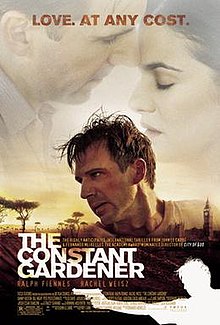
The Constant Gardener


Plot: After his wife is murdered in Kenya, Justin Quayle, a mild, low-level diplomat and a constant gardener, must investigate his wife's death, their relationship, and his own heart. In flashbacks, we see them meet, marry, and fall in love; we follow her in the teeming streets and clinics of Nairobi, usually accompanying Arnold Bluhm, a Black doctor with whom she spent the night before her murder, and who, after robbers, is the prime suspect. In his own investigation, Justin must not quail as he faces his memories, his colleagues, local police, hired thugs, and a nasty corporate CEO. Help and connections, as well as conspiracies, come from unexpected places. 


This is similar to my play because there is a theme of relationships and how far people would go for the people they love and care about. There is also a sense of journey as the couple in this travel to try and achieve what they want to find out which is similar to the questioning of the journey of the Jews in the Germans hands and getting the know the truth about the camps.